Editorial Selection — Visual Life
Seeing What Endures | The Arnheim Framework & LLP
A continuation of the legacy series by Arnold Szmerling.
This essay began as an exercise. A folio of images spanning decades of work — weddings, milestone portraits, and family sessions across Melbourne, Jerusalem, and beyond — was submitted for AI-assisted analysis using Rudolf Arnheim's seven-lens framework: Balance, Shape & Form, Space, Light, Color, Movement, and Expression. What follows are the patterns that analysis surfaced, synthesized here into six images and four working principles. The observations are the model's; the conclusions drawn about what they mean for the practice of legacy portraiture are drawn from them.
Over the course of reviewing several dozen images for the Lifestyle Legacy Portraits (LLP) product line, a pattern surfaced that goes beyond aesthetics. The same seven-lens framework — Rudolf Arnheim’s Balance, Shape & Form, Space, Light, Color, Movement, and Expression — was applied to every image, and it worked as more than a scoring rubric. It kept revealing the same thing: that the formal decisions in Arnold Szmerling’s photographs are almost never made in service of the image alone. They are made in service of a relationship that existed before the shutter opened and is intended to continue long after the print is framed.
This is the distinction worth naming plainly, because it is what separates a Lifestyle Legacy Portrait from a standard portrait session, however skilled. Most portrait photography treats Arnheim’s seven categories as a toolkit for producing one excellent, self-contained image. In this body of work, the same seven categories function as a record-keeping instrument — a way of encoding who these people are to each other, at this moment, for people who have not been born yet.
The seven lenses as working vocabulary
Arnheim’s framework, briefly: Balance (how visual weight is distributed), Shape & Form (the geometry subjects and settings create together), Space (depth, layering, how planes relate), Light (direction, quality, and what it reveals or conceals), Color (as content, not decoration), Movement (real or implied), and Expression (what the face and body communicate, and what they withhold).
Applied to conventional portraiture, these categories typically answer a single question: is this a good photograph? Applied across this archive, they kept answering a different question: what does this photograph need to carry forward? That shift — from evaluating a picture to evaluating a vessel — is the throughline of everything reviewed in this project.
Five images, five demonstrations
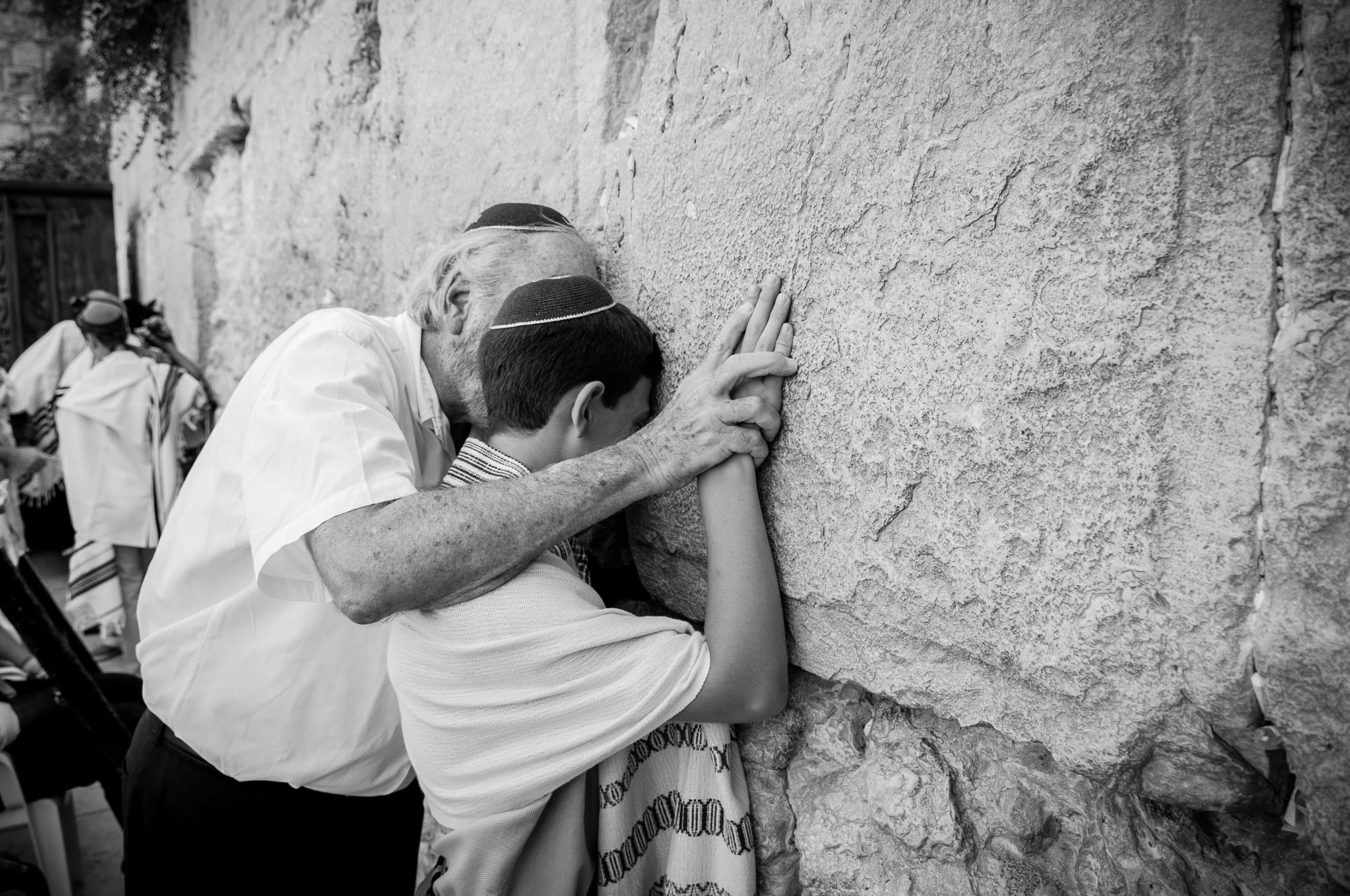
1. The grandfather and grandson at the Western Wall.
This image withholds the one thing standard portraiture almost always demands: visible expression. Both faces are turned into the stone. By any conventional metric, that’s a failure — no eye contact, no smile, no legible emotion. But Balance and Space are doing something more important here: the sheer scale of the ancient wall against two small, pressed-together figures is the expression.
The photograph isn’t documenting how they feel. It’s documenting what they belong to. That’s a decision only available to a photographer who understands the wall matters as much as the people — which is a form of knowledge about family, faith, and occasion that has nothing to do with camera settings.
2. The Bat Mitzvah girl in red, against the carved relief wall.
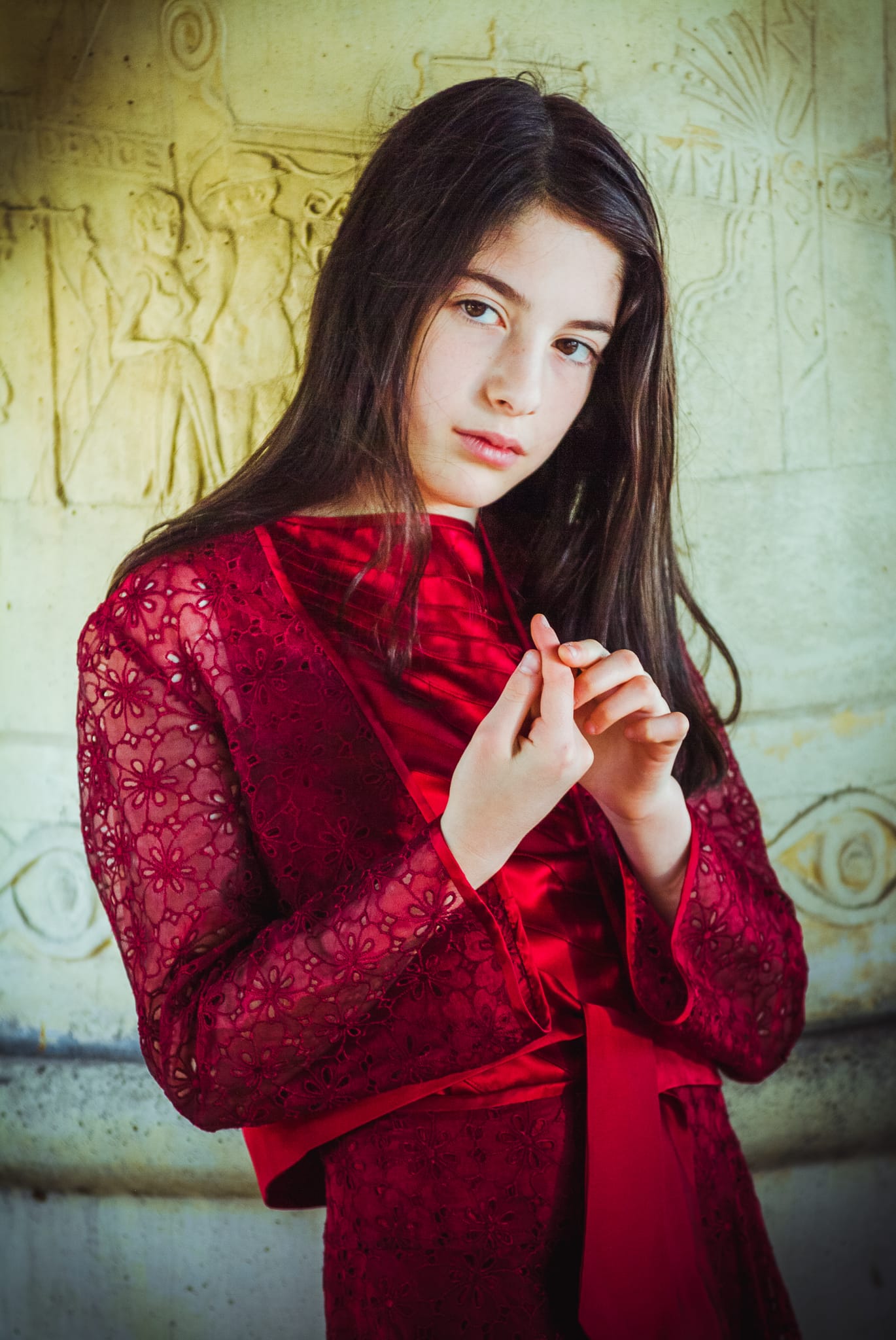
Here Color stops being aesthetic polish and becomes the subject. The saturated red against warm stone isn’t a styling choice divorced from meaning — it’s a deliberate collision between a specific young woman, at a specific milestone, and a setting chosen because it will outlast the outfit, the hairstyle, and the fashion of the year the photograph was taken.
Standard portrait photographers select backgrounds for how they flatter. This selection reads as having been made for how it will still mean something in thirty years.
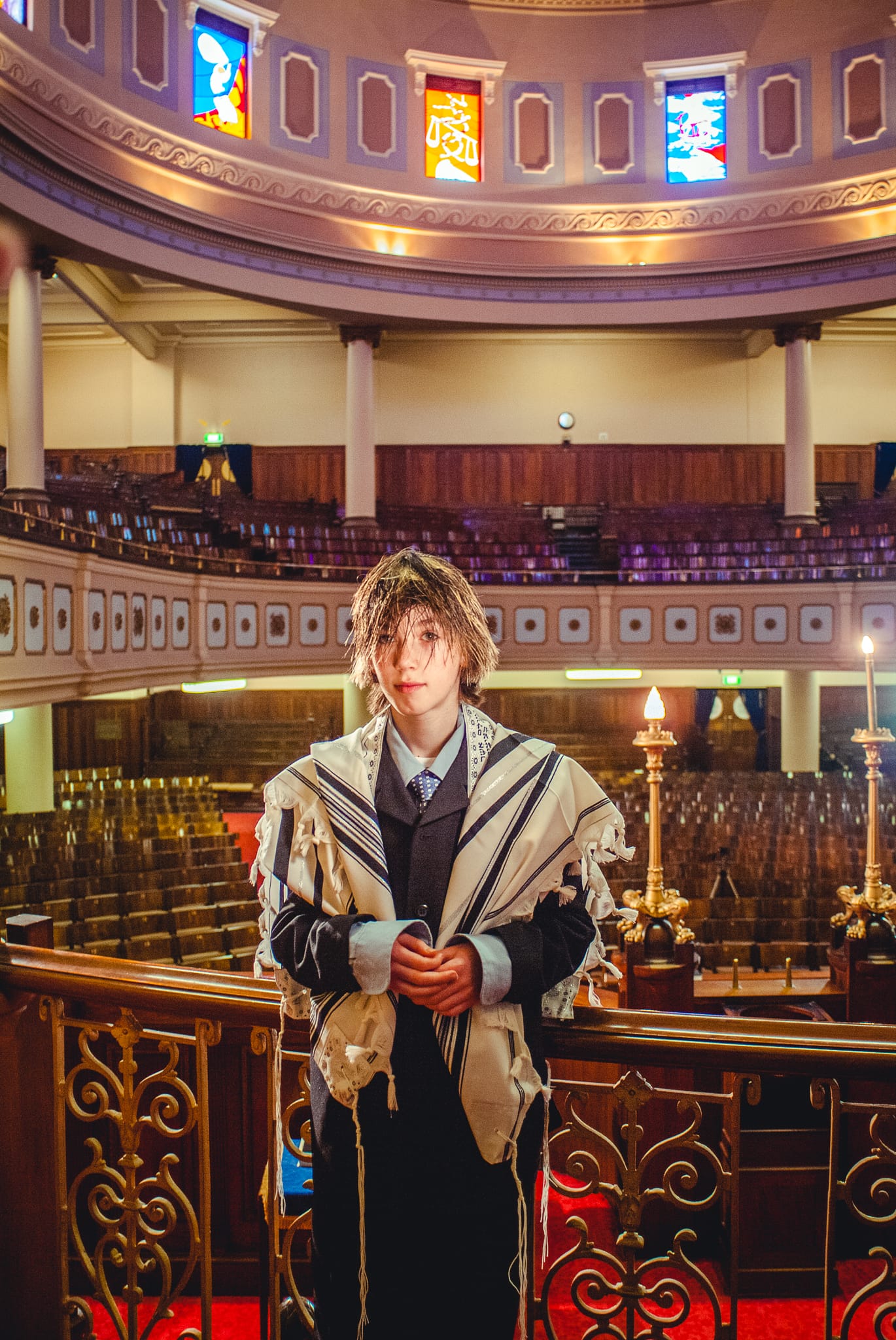
3. The Bar Mitzvah boy on the synagogue balcony, beneath the stained glass.
This is Shape & Form and Space working at full stretch — the dome, the tiered seating, the scale of the building dwarfing a single standing figure. A standard event photographer would crop tighter, isolate the subject, remove the “distraction” of the architecture. Here the architecture is the point: it’s a record of where, not just who.
That’s the reverse-engineering instinct at work — the same instinct that leads to studying birth announcements years before a client’s family reaches this milestone. The photograph already knows it will be looked at by people who were never in that room.
4. The girl beneath the ornate ceiling of a Melbourne theatre, "The Lion King" banner glowing behind her.
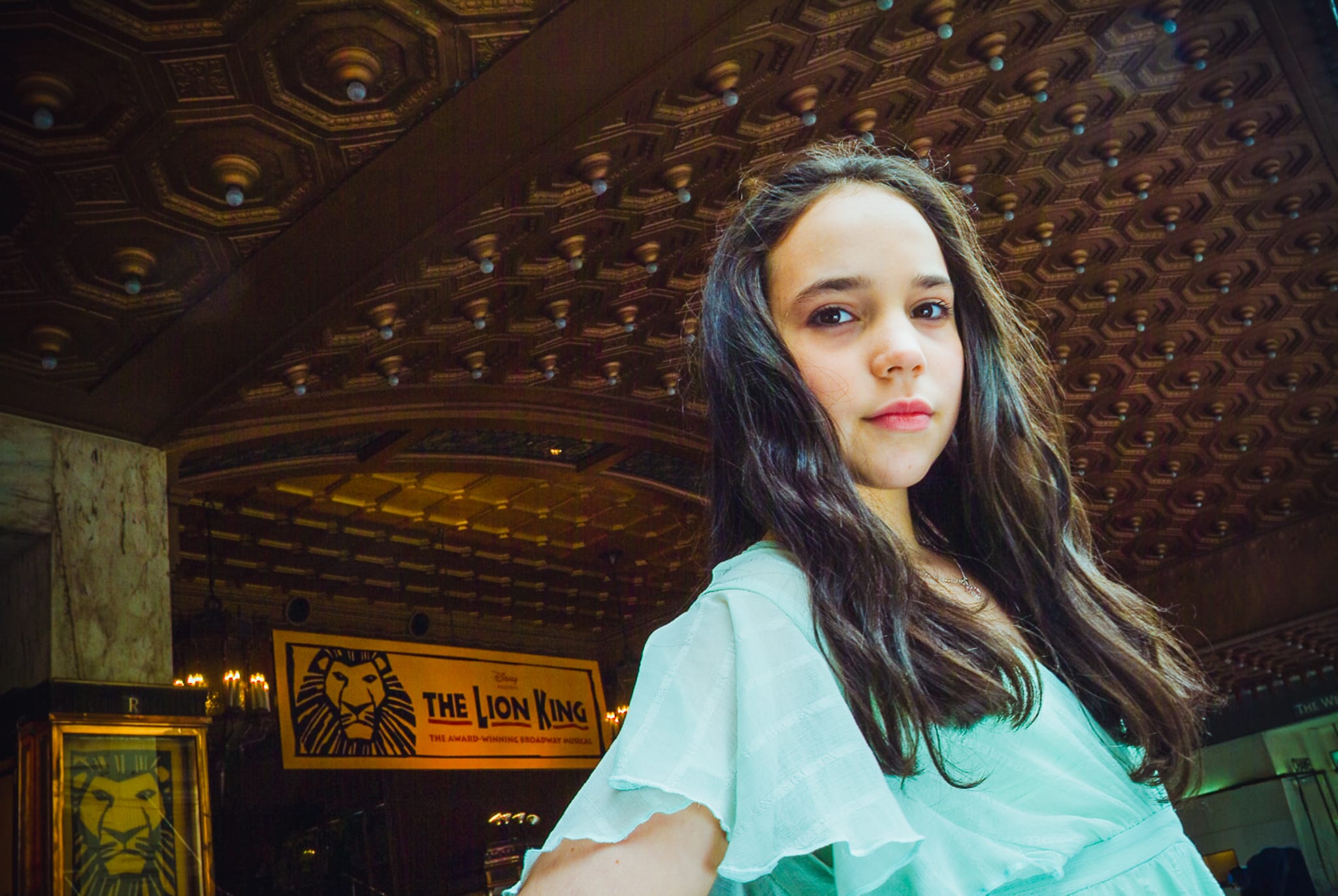
Low angle, dramatic scale, a single named, dateable event folded into the frame — and here the connection runs deeper than backdrop. This was not a family outing photographed in front of a poster; the girl in the frame was the production’s own young cub actress, photographed in the theatre where she was performing. That fact changes what Space and Light are doing in the image. The dome, the marquee, the glow of “The Lion King” signage behind her aren’t scene-setting — they’re documentary.
This is a portrait of someone in the actual place of her own achievement, at the actual time of it, which is a different order of “locatable” than a photograph merely staged near a recognizable landmark.
A family looking at this image in twenty years won’t need to be told what night this was, who she was, or why the building matters. The photograph did all of that work at the time of capture, using the same tools — architecture, low angle, ambient venue light — that another photographer might have used only to make the shot look more dramatic. Here they’re doing the work of a credential.
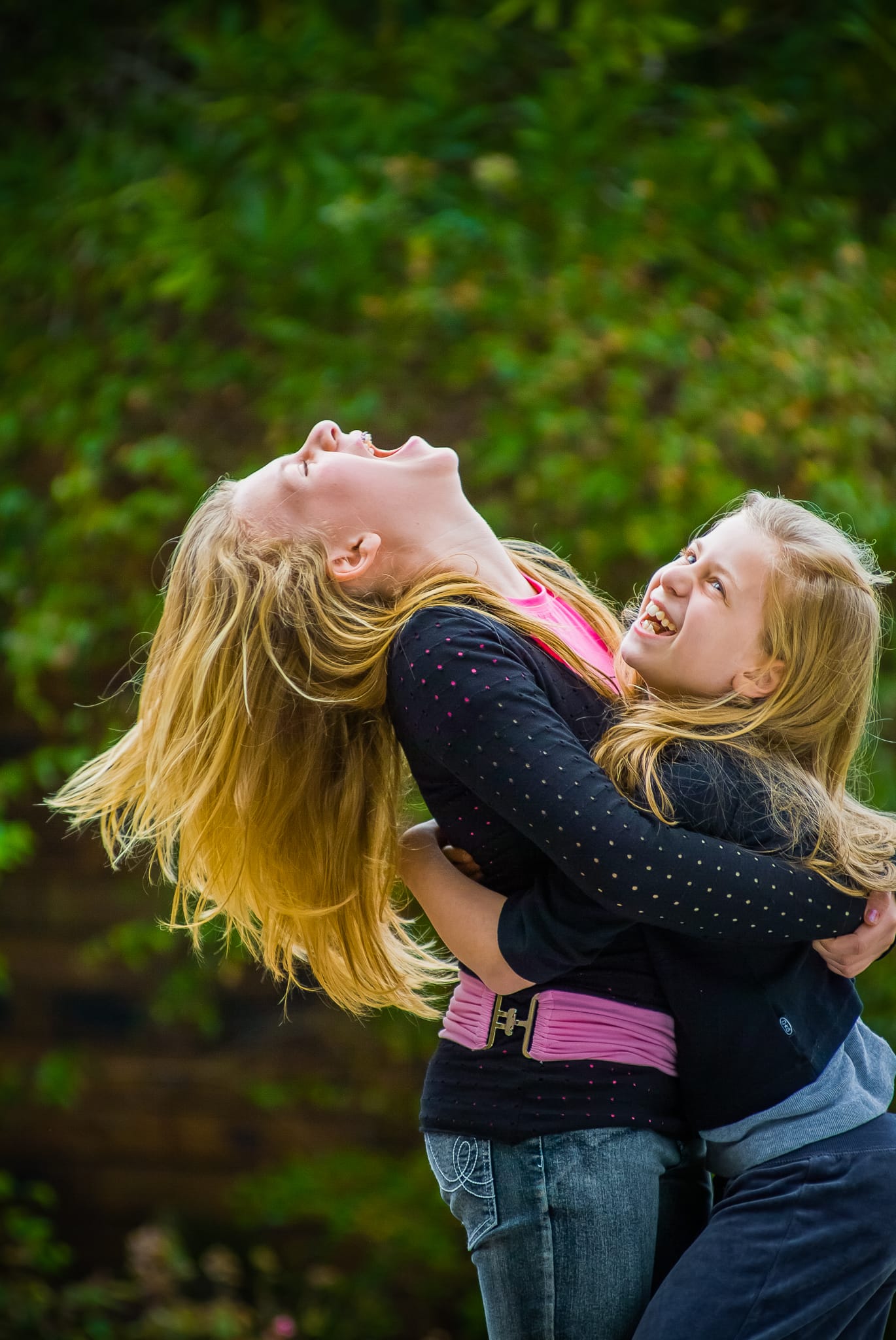
5. Two girls caught mid-embrace, one arched back in a full laugh with her hair flying, the other laughing into her shoulder, backlit against green foliage.
This is the clearest case of Movement and Expression working because something else happened first: psychological safety. Nobody produces this kind of unguarded, physically released laughter on command — the arched spine, the flying hair, the full-body commitment to the moment.
That kind of Movement only appears once a photographer has already done the quieter work — knowing the people, adapting to them rather than asking them to adapt to a formula, treating the session itself as part of what’s being remembered. The technical result (authentic motion, real laughter, a genuinely alive frame) is downstream of a relational choice made before the camera was raised.
6. A girl alone in a plaid jacket, leaning against a tree, her gaze soft and unfocused, autumn bokeh dissolving the background into gold and green.
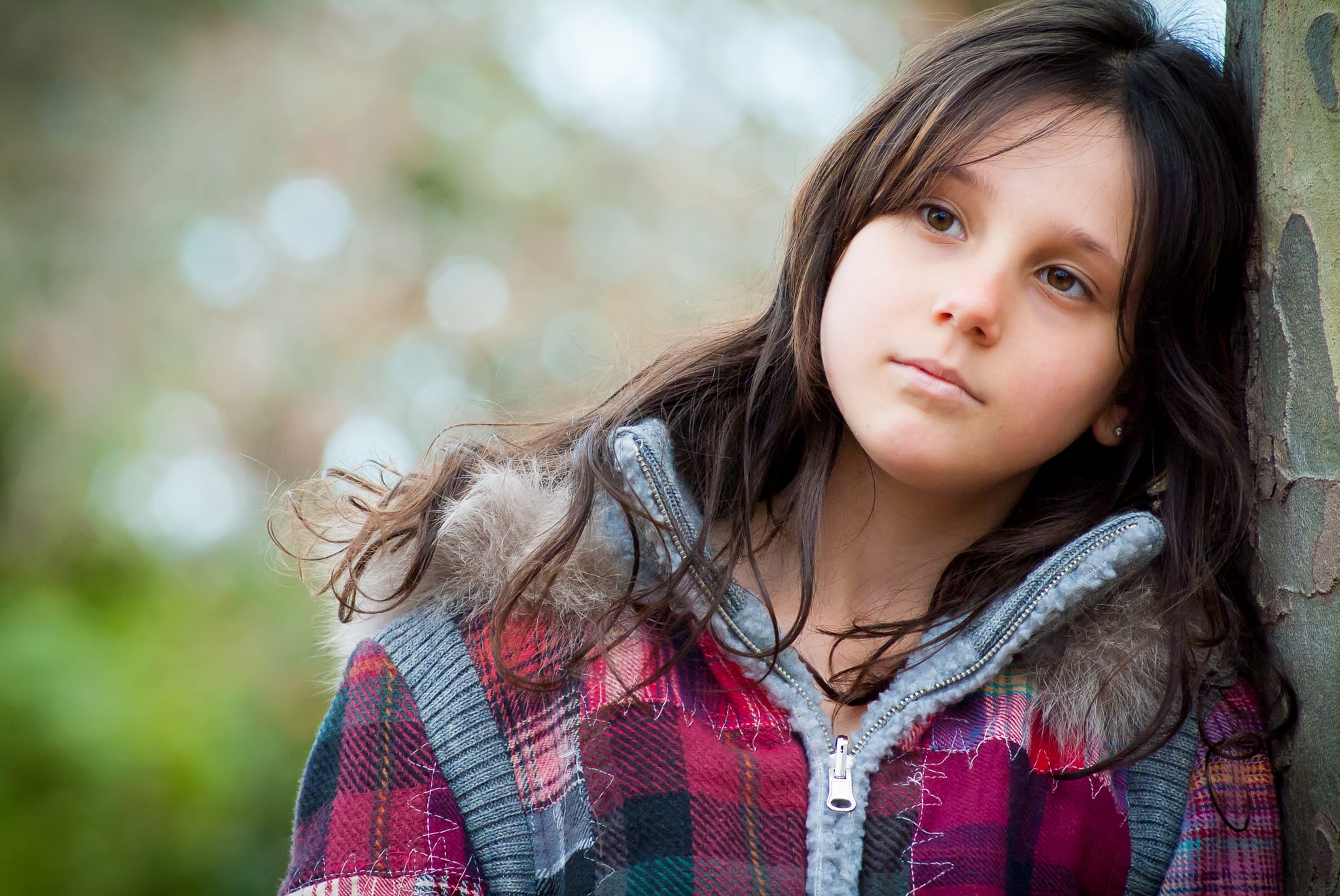
Set beside the previous five, this one is doing something quieter and, in its way, harder: nothing external is helping it along. No sacred site, no named event, no relational gesture between two people, no motion. It’s a single figure, a single tree, and a soft, unguarded expression that isn’t performing anything at all. Light and Color are doing the emotional labor here rather than Space or occasion — the shallow depth of field and warm, diffused tone read less like a backdrop and more like a mood the photographer waited for rather than manufactured.
This is the control case in the set: strip away the architecture, the ritual, the milestone, and the underlying discipline still holds. Expression is still protected rather than directed. That restraint is what keeps this from becoming just another pretty portrait — the same patience visible in the Western Wall image is visible here, only with nothing but a tree and afternoon light to work with.
What actually separates this from standard portrait photography
Reviewing this many images side by side made the differences concrete rather than aspirational. Four stood out consistently:
The formal elements serve continuity, not a single flattering result.
In standard portraiture, Balance, Light, and Expression are optimized to produce the best possible image of a moment. In this work, the same elements are repeatedly optimized to produce the best possible record of a relationship, a lineage, or a site — even when that means sacrificing a conventionally “better” shot (turned-away faces at the Wall; an architecturally dominant, human-scale-diminishing frame in the theatre and synagogue images).
Relational knowledge precedes formal choice, rather than following it.
A photographer who knows a family’s names, ages, personalities, and history before the session begins is not just being polite — that knowledge changes what gets framed, when the shutter fires, and which “imperfect” moments get kept. The laughing embrace in Example 5 is unreproducible without that groundwork. This is the direct photographic expression of what might otherwise sound like a soft skill: exceptional observation and psychological intuition showing up as measurable compositional decisions.
The photograph is treated as one node in an ongoing relationship, not an endpoint.
Across every batch reviewed, the strongest images consistently came from repeat locations, milestone occasions, and settings with real personal or institutional history (a family’s regular synagogue, a hotel relationship built over years, a specific theatre visit). Standard portrait photography treats each session as discrete.
This method treats each session as a chapter, which is why questions of sequencing, pairing images across ages (the twin babies and the twin boys, reviewed together), and archival presentation matter as much as any single frame.
Expression is protected from performance, deliberately.
A recurring pattern in this review: the images that read as most “campaign,” “editorial,” or performatively polished — however technically excellent — were consistently the ones that didn’t belong in the Collection Album.
The images that did belong were the ones where the subject seemed to have forgotten the camera was there. That’s not an accident of luck across dozens of sessions; it’s the visible result of a working method that treats connection with subjects as part of the craft itself, not a warm-up before the “real” photography begins.
The second observation
A separate assessment — compiled independently from stories, working history, and stated principles rather than from the images themselves — arrived at a striking parallel set of conclusions: exceptional observation, human recognition, psychological intuition, trust-building, legacy-minded thinking, and a premium positioning instinct rooted in personal service rather than price competition.
What’s notable is how cleanly that vocabulary maps onto the Arnheim vocabulary used throughout this review, even though the two were derived from entirely different material — one from photographs, one from stories and stated principles:
| Story-derived quality | Arnheim-derived evidence in the images |
|---|---|
| Exceptional observation | Consistent noticing of Space and Light details competitors would crop out (architecture, venue, scale) |
| Psychological intuition | Movement and Expression that only appear once genuine trust has been established |
| Legacy-minded thinking | Color and Balance choices made for durability of meaning, not short-term flattery |
| Reverse engineering / anticipation | Space used to encode place and occasion as deliberately as it encodes likeness |
| Recognition of the individual | Expression treated as something to protect and wait for, not direct or manufacture |
Two independent analyses — one reading photographs, one reading working history — landing on the same conclusions from different directions is itself a form of evidence. It suggests the seven-lens framework isn’t being imposed on this body of work from the outside. It’s describing, in technical language, what the relational method was already doing.
In short
Standard portrait photography asks Arnheim’s seven questions in service of one image. This method asks the same seven questions in service of a family’s whole visual history — which is why the framework, applied consistently across five separate review sessions and dozens of images, kept arriving at the same conclusion from a different angle each time — including once with no ritual, no milestone, and no relationship in the frame at all: the strongest photographs in this archive are not the most technically perfect. They are the ones where formal craft and genuine human knowledge became indistinguishable from each other.